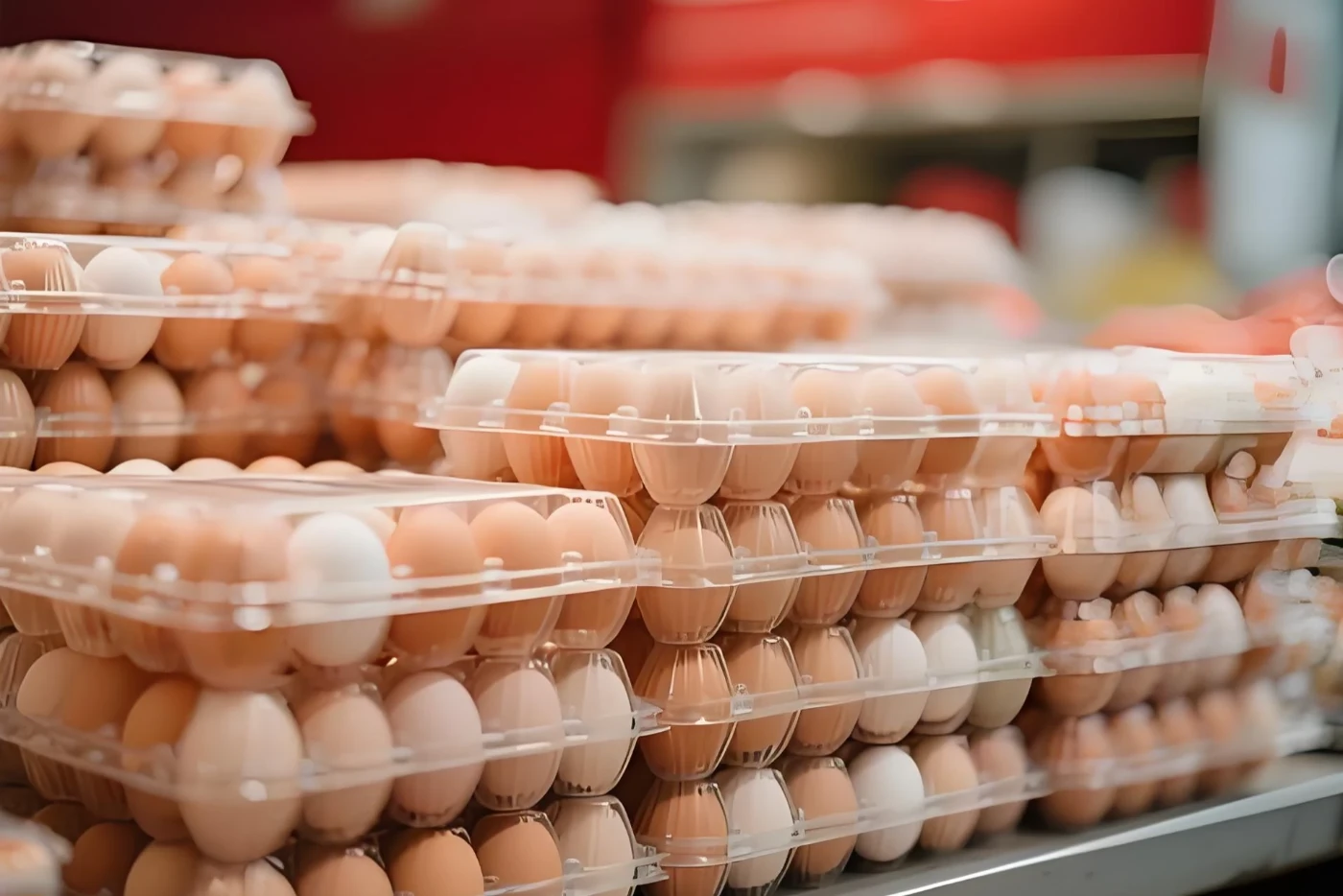
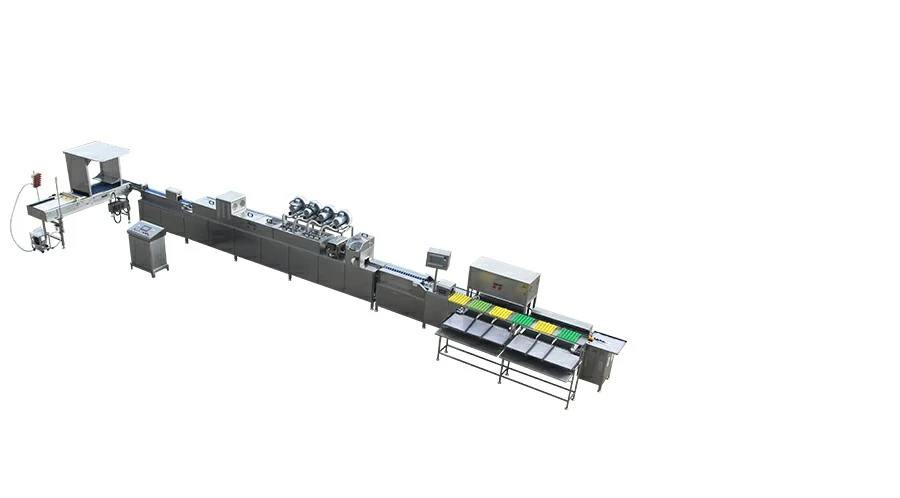
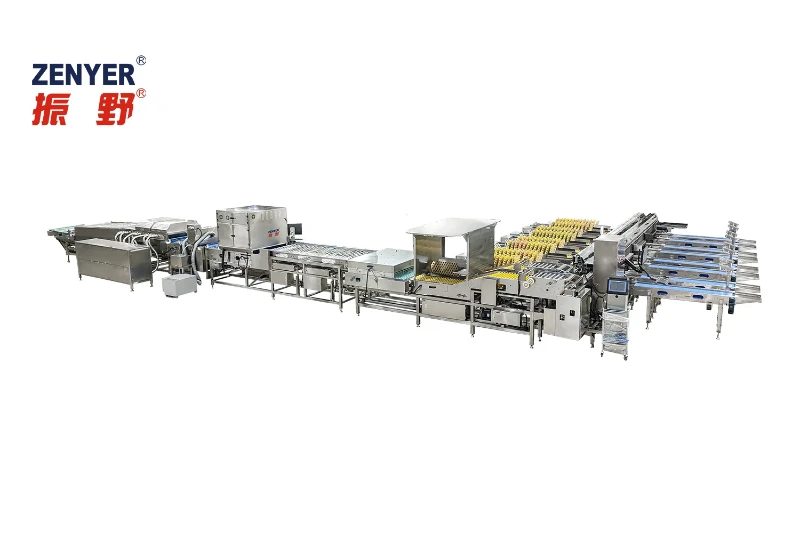
305A Egg Washing Grading Line
Model: ZYL-JS12-2HDS6-8Z
Description
Product Overview
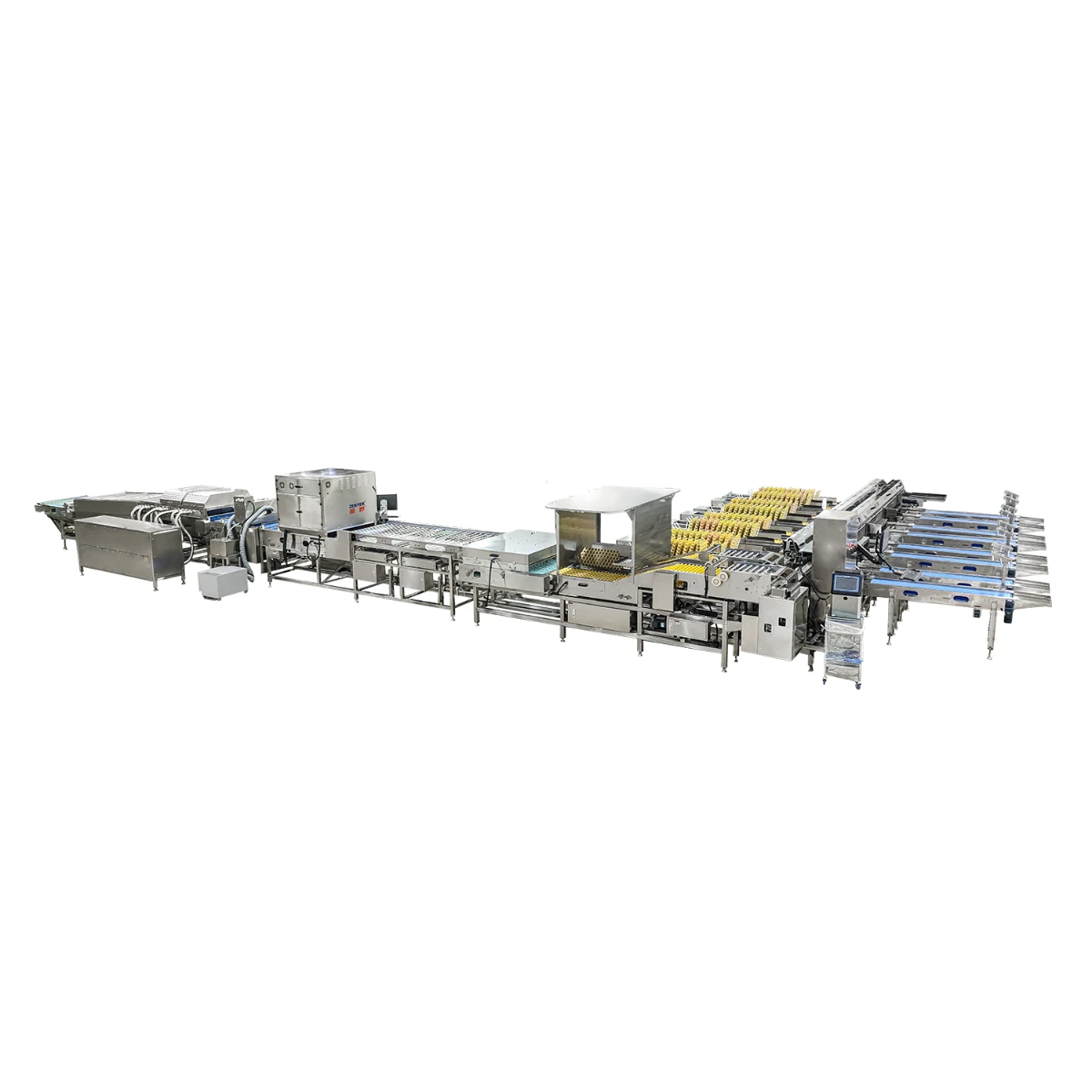
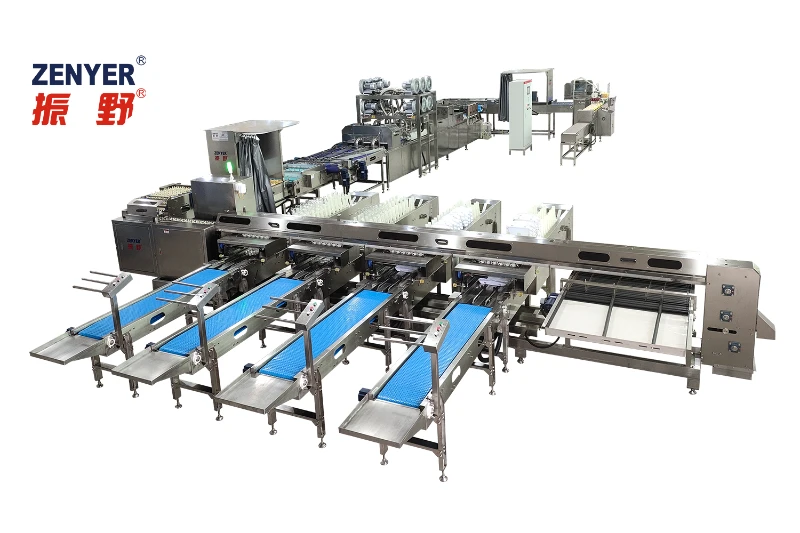
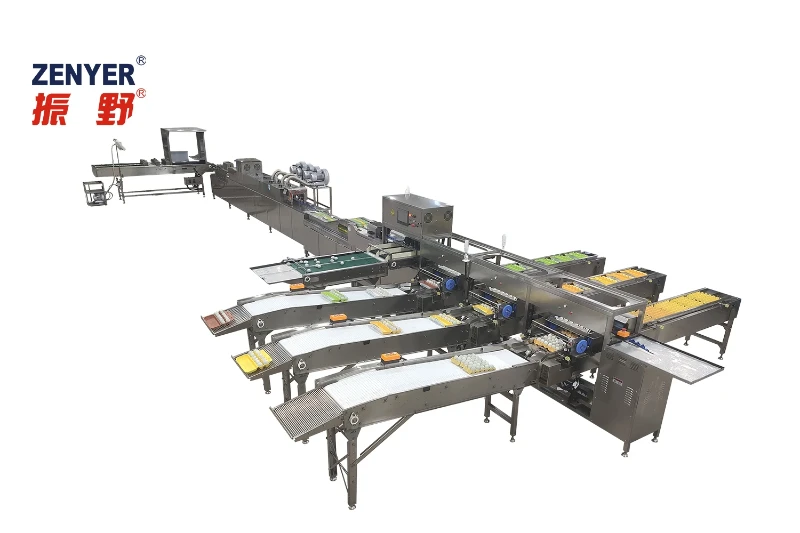
The 305A Clean Egg Production Line (Model: ZYL-JS12-2HDS6-8Z) is a large-scale equipment for processing and cleaning eggs. It has a production capacity of up to 60,000 eggs per hour and is equipped with functions such as disinfection spraying, cleaning, air drying, oil spraying, automatic turning, weight grading, and automatic packaging. It can be directly connected to a central egg collection conveyor belt. Additionally, options such as a robotic egg loading mechanism, online coding, and AI vision inspection can be selected according to specific requirements, allowing for different configurations to be chosen based on various application scenarios.
This device is not only capable of loading 5*6 egg trays but also automatically inserts egg trays (boxes) of other specifications, such as 2*5, 2*6, 3*5, and 3*6, which can be made from blister packs or pulp boxes. It is suitable for use in medium to large-scale egg chicken farms or egg product processing enterprises.
Use Case 1: Laying Chicken Farm
It can be directly connected to the central egg collection system, and you can choose to connect from the side or the back depending on the placement. When connecting to the central egg collection system, the egg collection belt must be controlled in coordination with our equipment. Since the eggs just produced on the farm have not been screened, to ensure the uniform quality of the eggs, we recommend using AI vision inspection equipment. The inspection accuracy of this equipment is much higher than that of human eyes; it can identify and remove substandard eggs before the eggs undergo cleaning and processing.
Use Case 2: Egg Product Processing Enterprises
For egg processing enterprises, we have equipped the egg loading process with automated robotic egg loading devices. These devices are easy to operate, efficient, and labor-saving, which significantly reduces the manual workload. In addition, an AI vision system can also be configured to pre-screen out unqualified eggs.
Device Schematic Diagram
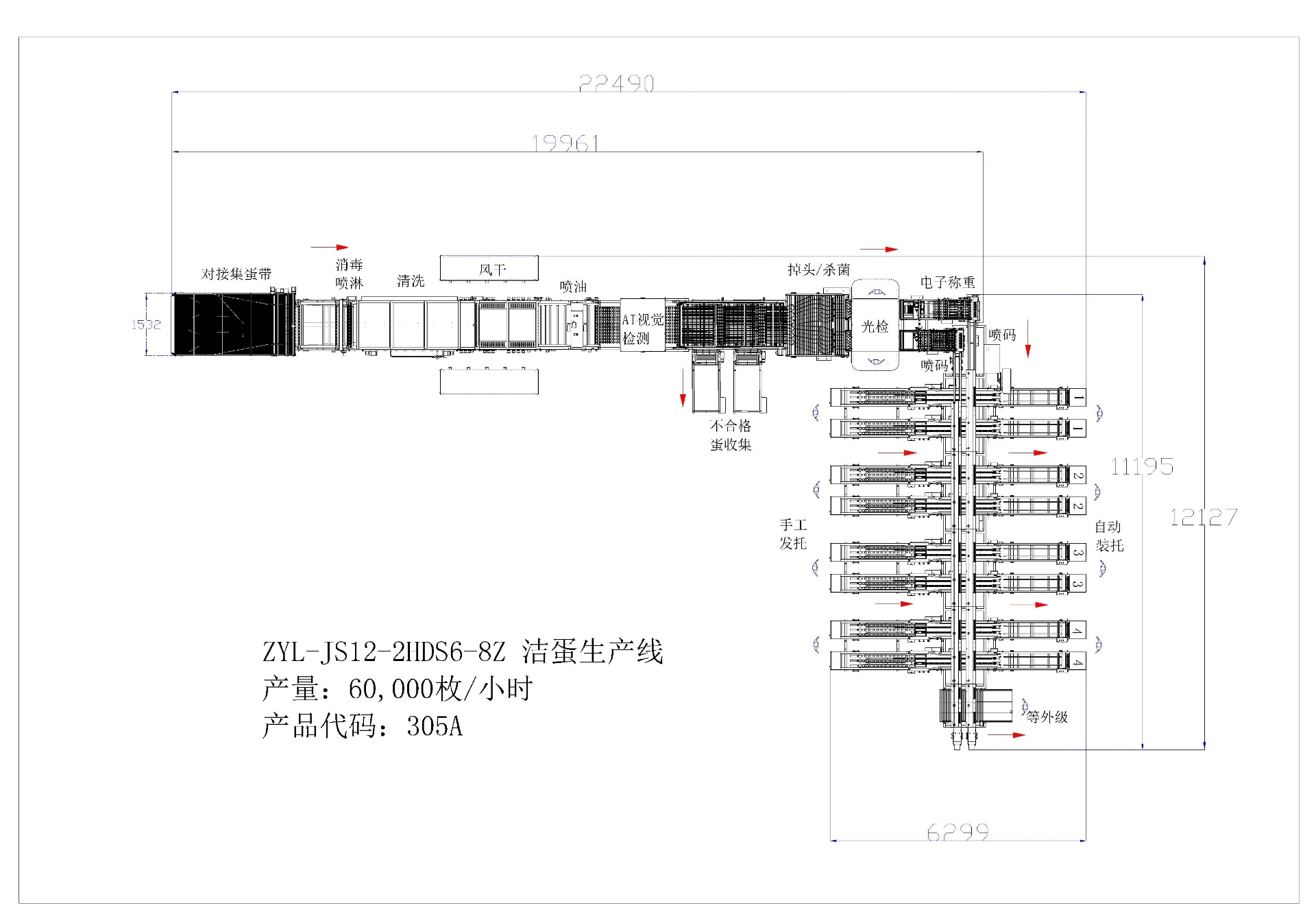
Process Flow
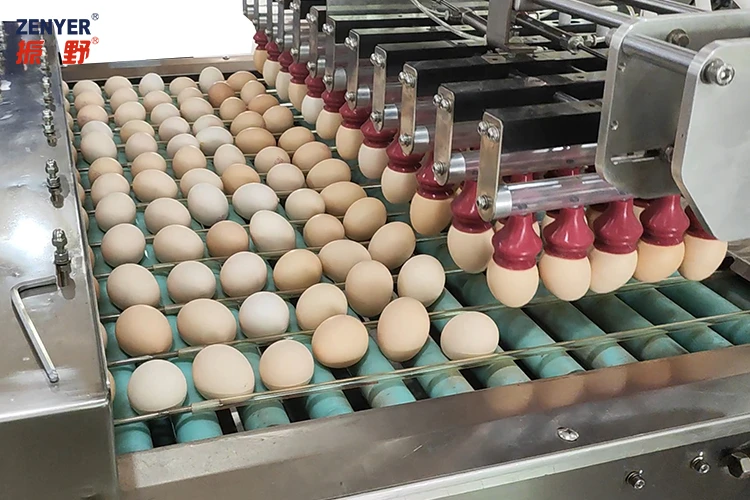
Automatic egg loading by the robotic arm (optional): Workers place the eggs (5*6 eggs per tray, with 5-6 trays stacked) onto the robotic conveyor. The robotic arm then automatically grabs the eggs and transfers them to the adjacent rubber-wheel conveyor, while the empty egg trays are collected together.
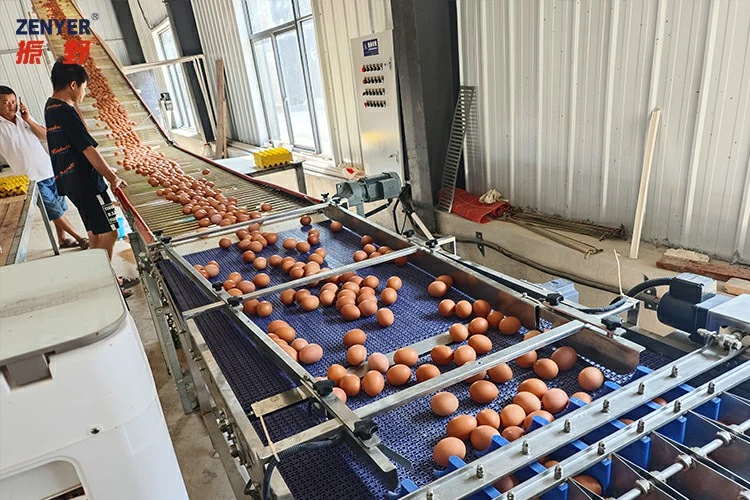
Egg collection conveyor belt: It features a two-section design with a sensing mechanism that automatically adjusts the speed of the front section based on the congestion level of the eggs, thereby reducing egg blockages. The rear section is equipped with left and right swinging mechanisms as well as 12 channeling devices to further minimize blockages and ensure a more even distribution of eggs.
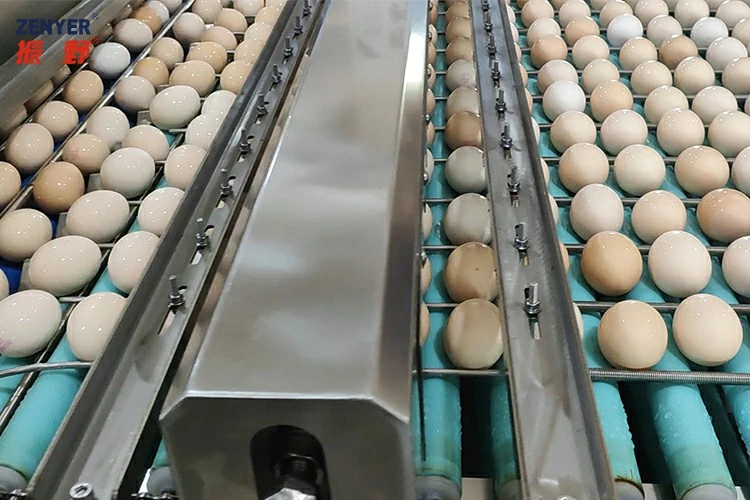
Disinfection Spraying: Equipped with an automatic proportioning pump and dosing device, the disinfectant is sprayed onto the surface of the eggs through a high-pressure spraying system, achieving the desired disinfection effect; the flow rate of the disinfectant can be adjusted and controlled.
Cleaning: The eggs are placed into an egg cleaning machine, where they are sprayed with warm water and brushed before entering the air-drying system. The water heater is provided by the customer. For food safety reasons, the water used for cleaning eggs cannot be reused, and the amount of water can be adjusted according to the degree of dirt on the eggs.
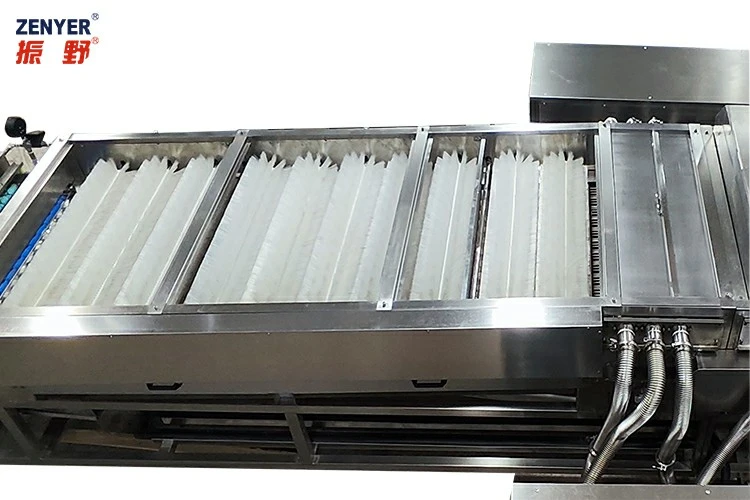
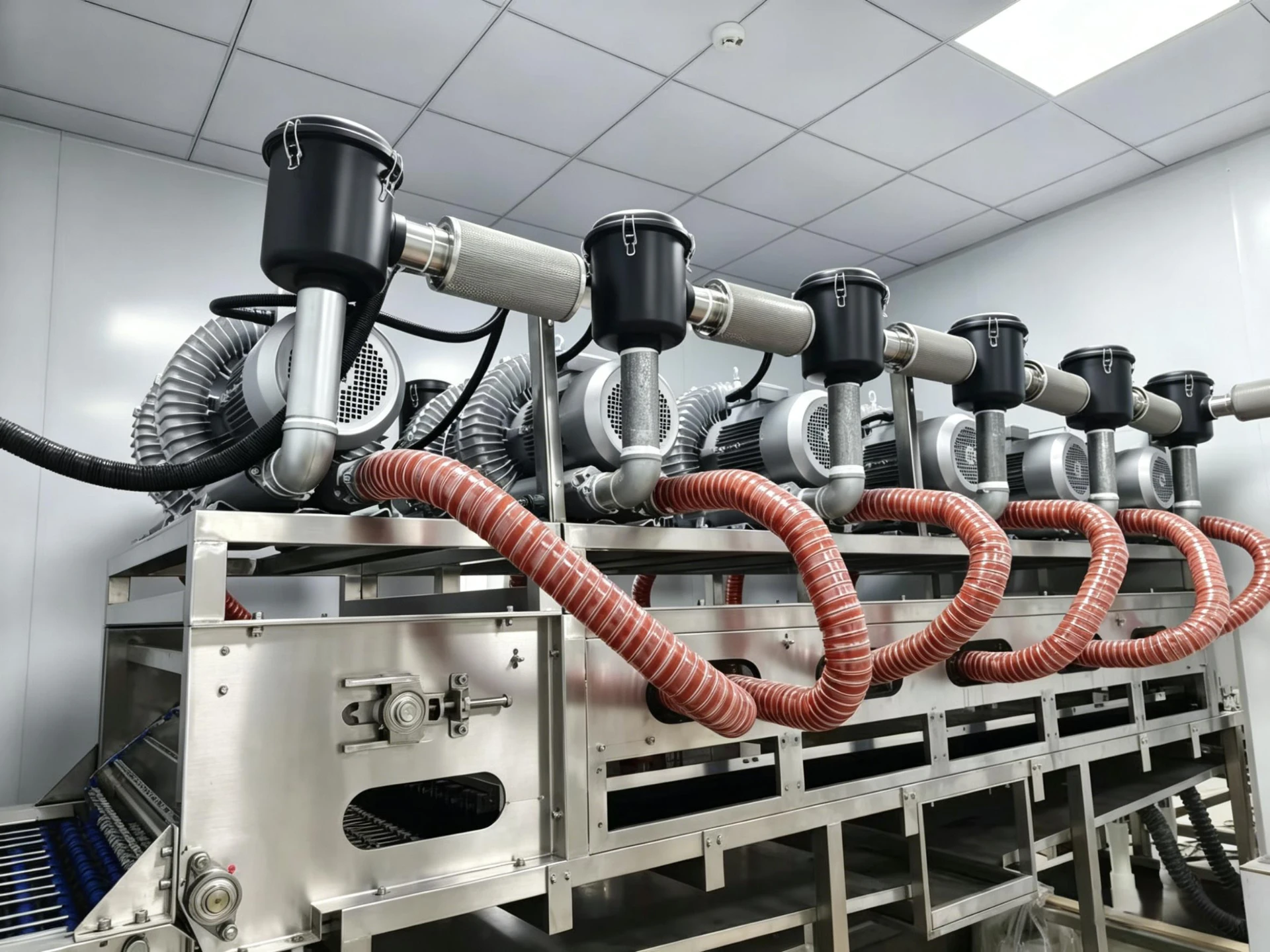
Air Drying: The air-drying brush in the posterior section of the egg cleaning machine removes most of the water from the eggs. The remaining water droplets on the eggs are dried by the strong airflow generated by the fan, with a drying efficiency of up to 95% (depending on the local environmental humidity).
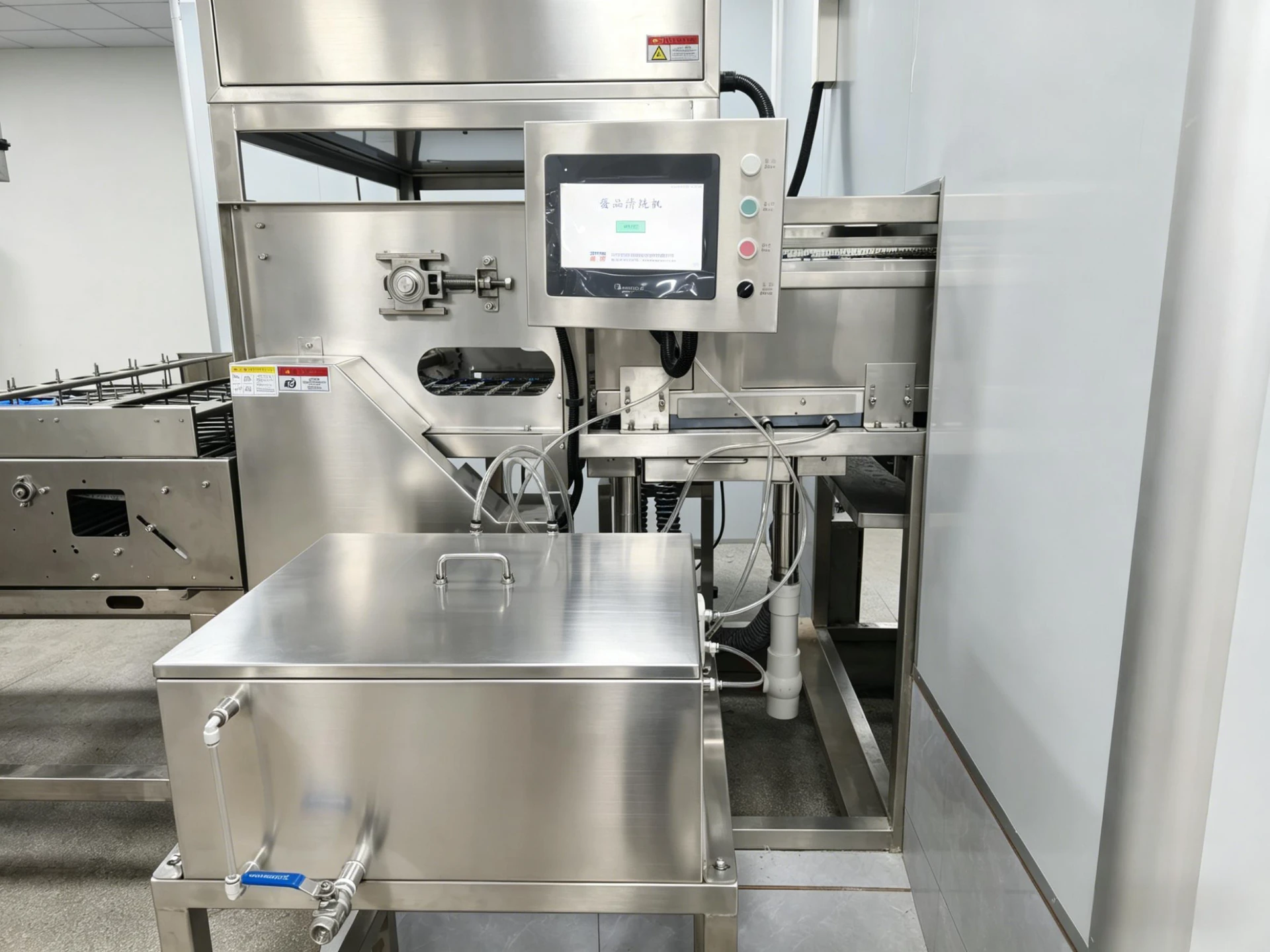
Spraying: Apply food-grade white mineral oil onto the surface of the dry and clean eggs. A uniquely designed spraying device atomizes the white mineral oil into particles smaller than 0.05mm, which then adhere to the eggshell. These particles are quickly absorbed by the eggshell’s capillaries, forming a protective layer that helps reduce the loss of moisture inside the egg and prevents the entry of external bacteria. (The air compressor used for spraying is provided by the customer.)
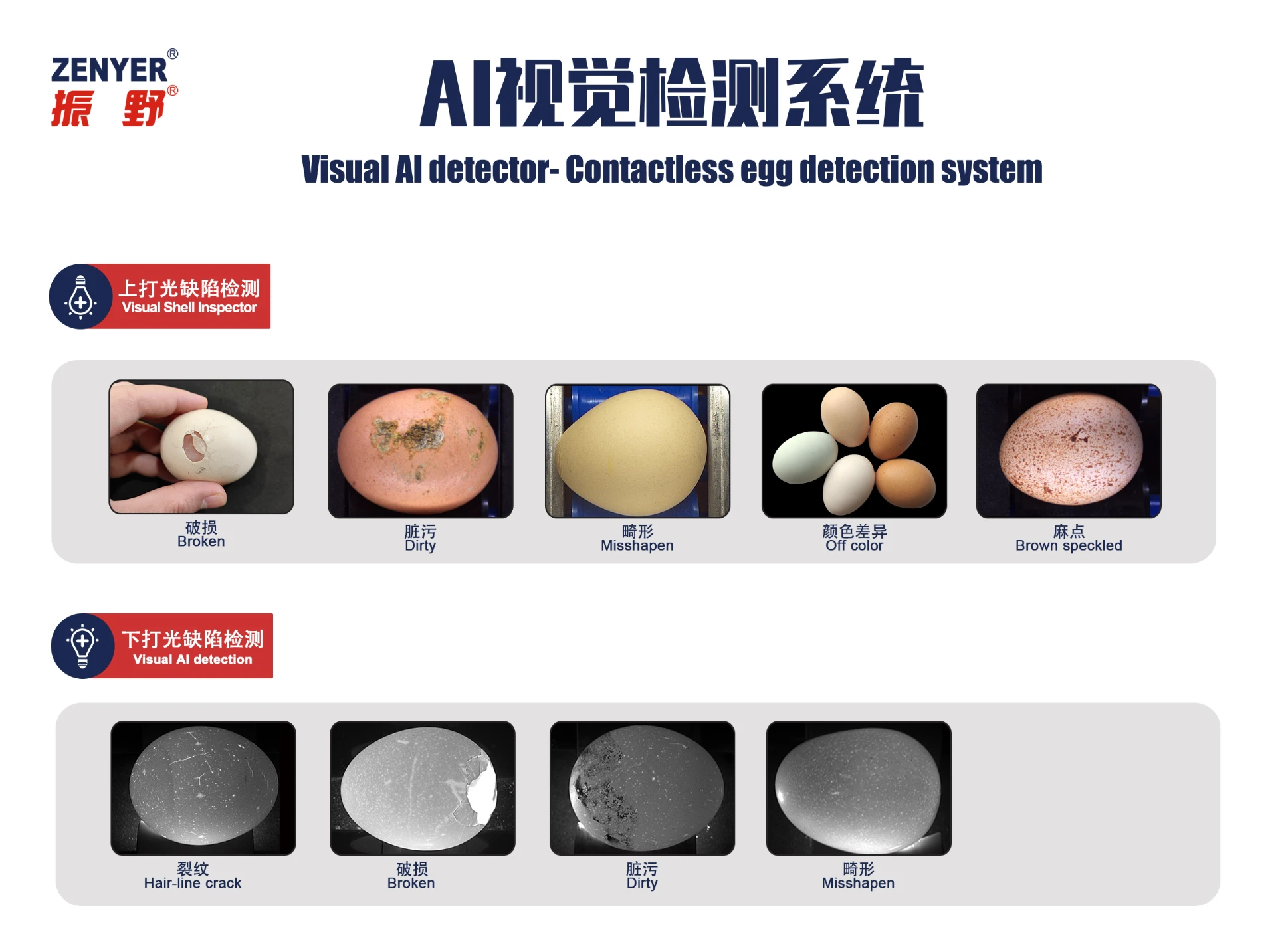
AI Vision Inspection System: An intelligent AI vision inspection system that can automatically identify and eliminate defective eggs, such as those that are damaged, dirty, misshapen, have sand on their shells, pockmarks, or color variations. The detection accuracy rate exceeds 95%.
Sterilization: The eggs are subjected to ultraviolet sterilization using special lamps, which reduces the number of bacteria on the eggshell surface to a minimum.
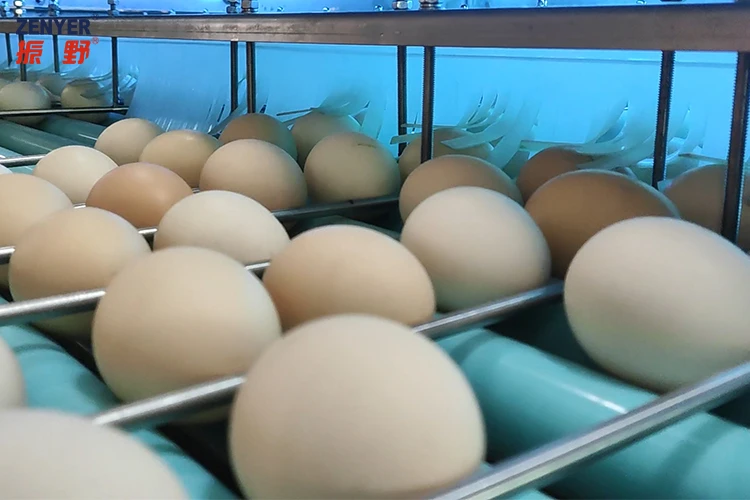
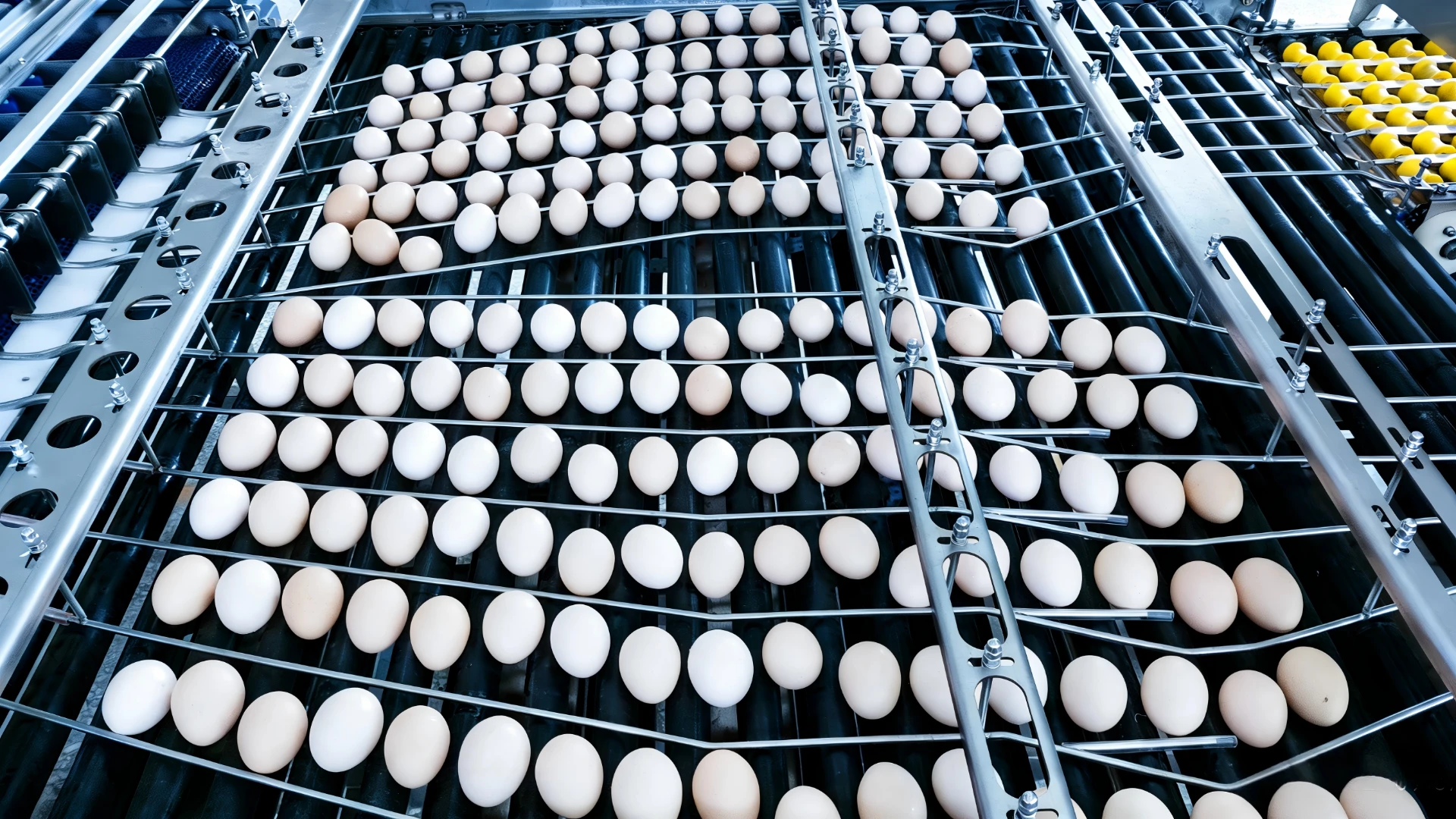
Turnaround: A specially designed turning mechanism ensures that the eggs are oriented perfectly. The larger head (air chamber) faces upwards after the eggs are automatically packaged, allowing them to be stored for a longer period of time.
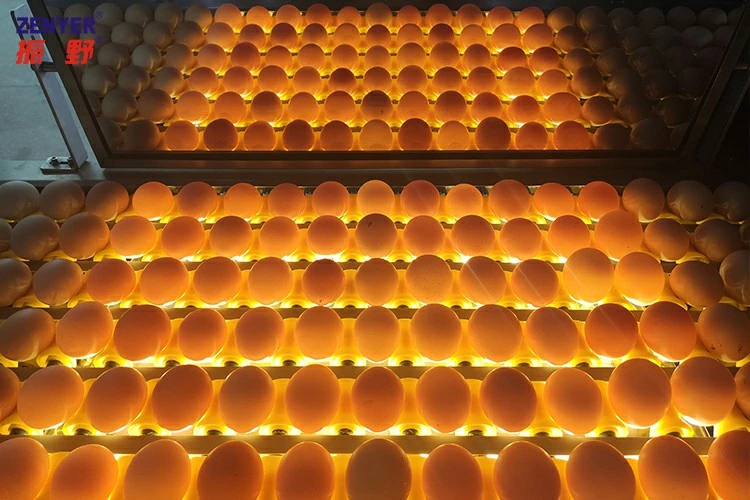
Light Inspection: The LED light inspection device is installed below the 12 rows of rollers. As the eggs pass through the rollers, human eyes use light transmission detection to identify and remove defective eggs, as well as eggs with irregular shapes or other issues that do not meet the quality standards.
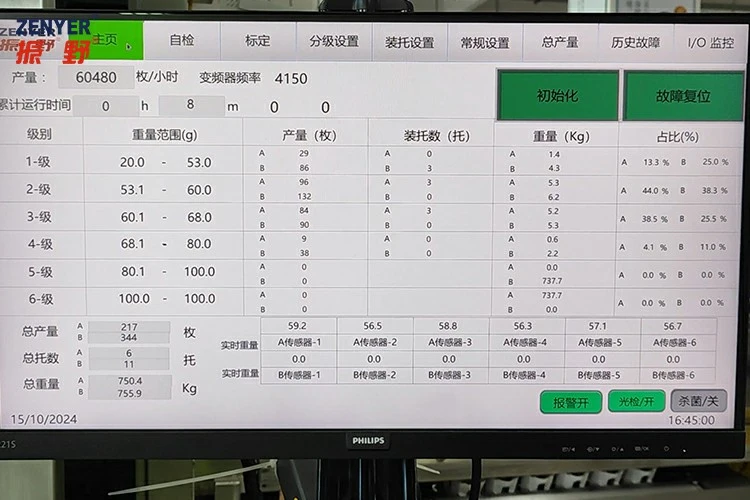
Grading and Counting: A color touchscreen PLC electronic grader with self-fault diagnosis capabilities. It can intelligently count the number of eggs at each grade for each shift, as well as the total number of eggs in each grade. The grading accuracy is ±1 gram.
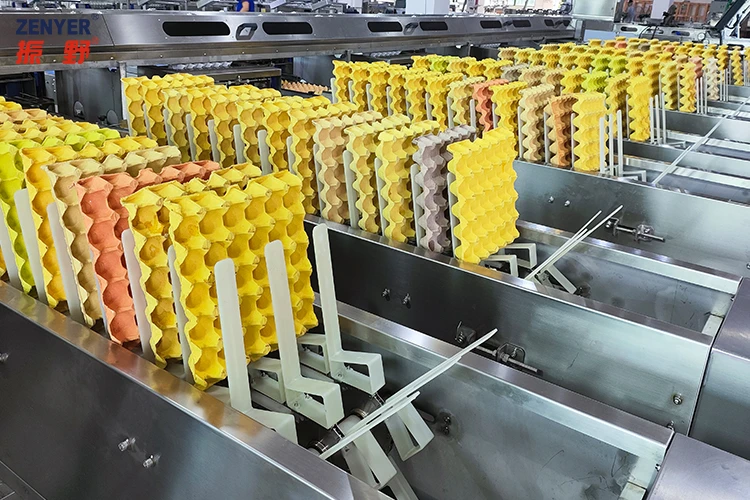
700B-4 Egg Packaging Machines (4 sets): These machines feature a dual-track conveyor and tray loading system, equipped with 8 tray loading lines, each of which is equipped with its own independent electrical control box that allows for individual operation. Each tray loading line can handle different types of packaging materials such as paper trays, plastic trays, pulp boxes, blister boxes, and foam boxes, and can also switch between different specifications. When packaging eggs in 5*6 trays, 2 machines are required to process one grade of eggs. For 3*5 or 3*6 blister boxes or pulp boxes, 4 machines are needed to process one grade of eggs. For 2*5 or 2*6 blister boxes or pulp boxes, 6 machines are required to process one grade of eggs.
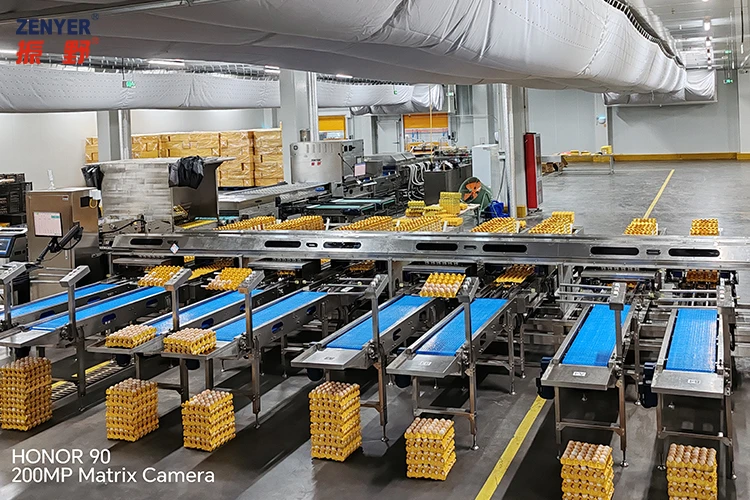
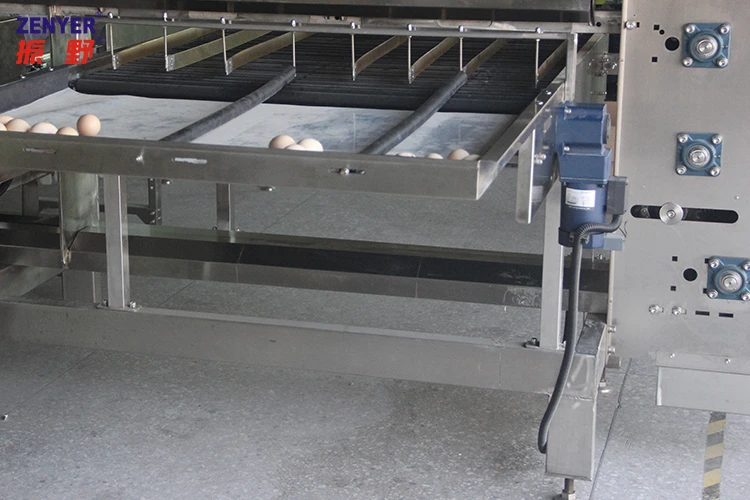
Eggs of substandard quality (1 set): Eggs that are too large or too small will be classified as substandard.
Features
- 1) Processing capacity of 60,000 units per hour, with up to 6 levels of classification.
- 2) Grading accuracy within ±1g, suitable for ultra-large-scale processing.
- 3) Integrates cleaning, inspection, grading, and loading onto pallets into one process.
- 4) Manufactured from 304 stainless steel, suitable for industrial-grade equipment.
- 5) Compatible with a variety of mounting and support specifications
- 6) Supports modular selection and configuration, allowing for flexible combination of solutions based on different production scenarios.
Specifications
Features
- 1) Processing capacity of 60,000 units per hour, with up to 6 levels of classification.
- 2) Grading accuracy within ±1g, suitable for ultra-large-scale processing.
- 3) Integrates cleaning, inspection, grading, and loading onto pallets into one process.
- 4) Manufactured from 304 stainless steel, suitable for industrial-grade equipment.
- 5) Compatible with a variety of mounting and support specifications
- 6) Supports modular selection and configuration, allowing for flexible combination of solutions based on different production scenarios.