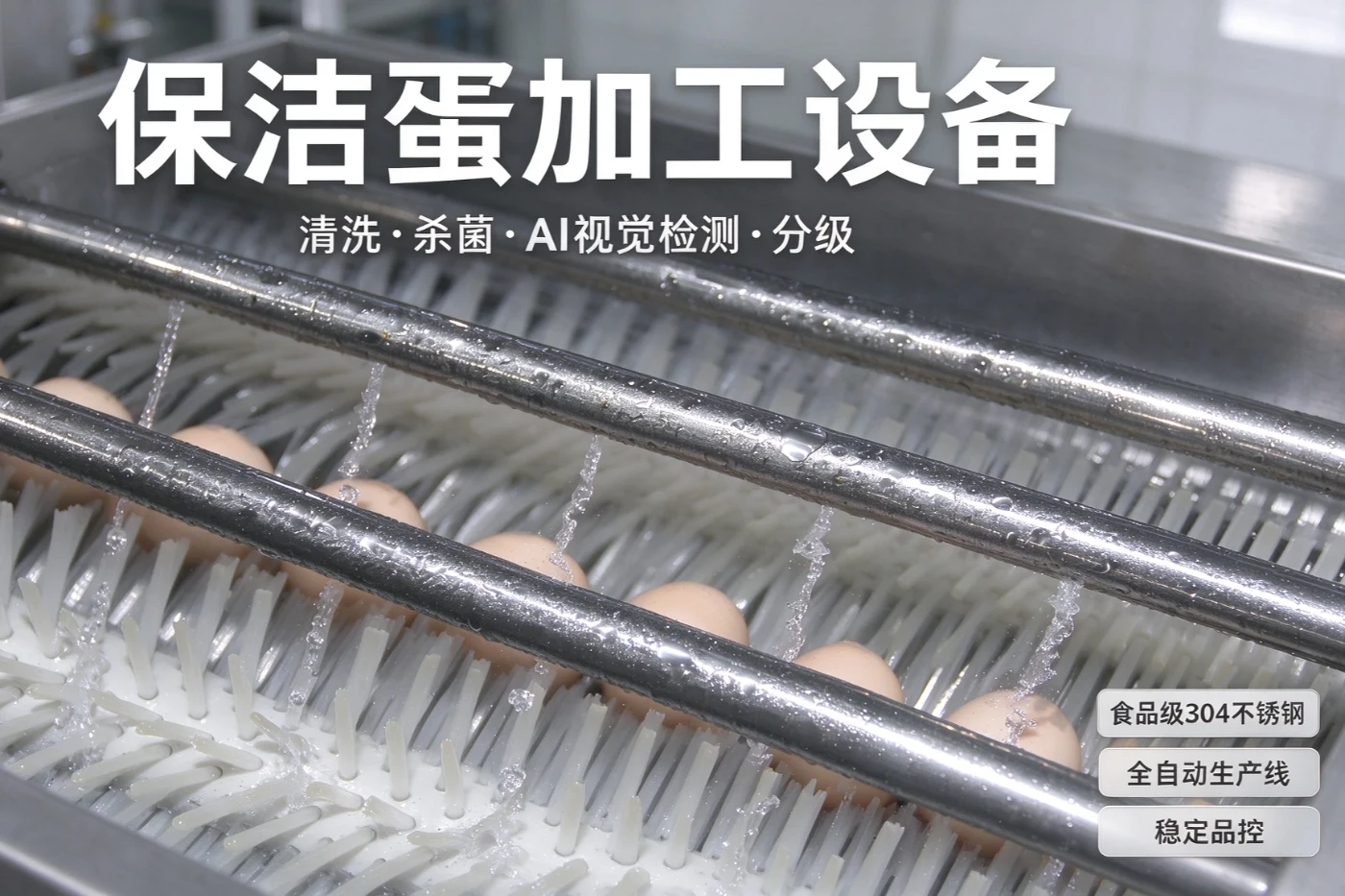
Consumers have increasingly high demands for the safety of fresh eggs. Traditional loose eggs often have feces and mud on their surfaces, and the risk of microorganisms such as Salmonella is difficult to control. Manual egg inspection and sorting are inefficient, with many missed detections, which no longer meet the standardized requirements of supermarkets, prepared food companies, and branded egg producers. Fully automated egg cleaning and processing production lines have become the core choice for the upgrading of egg processing centers (GP centers).
The ZENYER Egg washing & grading Line covers the entire process, including automated egg loading, cleaning, air drying, sterilization, film coating for preservation, AI visual inspection, weighing and grading, coding for traceability, and automatic loading onto trays. The machine is made of 304 stainless steel, which meets food safety standards, ensuring the eggs can be processed consistently and reliably.
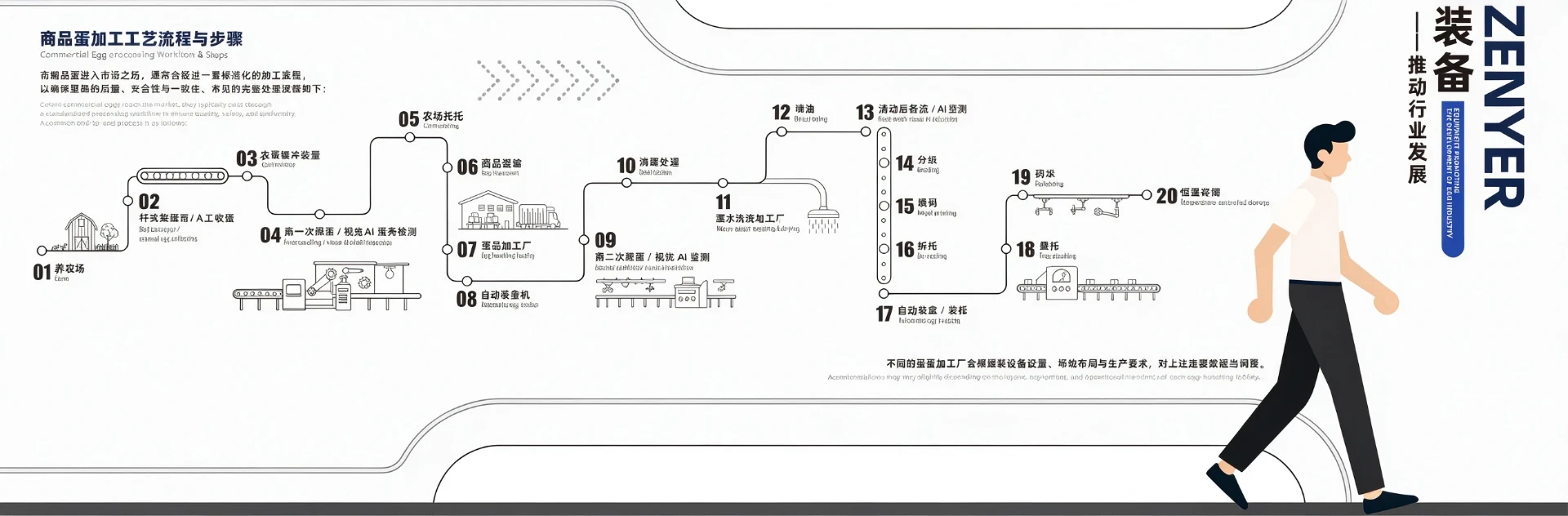
The core highlight of this production line is the integration of an AI vision inspection module for eggs. Unlike traditional methods that rely on visual inspection or acoustic testing, this system uses multiple sets of industrial cameras combined with specialized optical lighting sources. The eggs are rotated at a constant speed by rollers, allowing for 360° imaging of the entire surface. Deep learning algorithms are used to identify defects such as microcracks, dark cracks, stains, mold spots, deformed eggs, and eggs with sandy shells in real-time. The system is connected to high-speed sorting mechanisms that immediately remove any non-conforming eggs, eliminating the issues of missed or incorrect inspections caused by human fatigue. As a result, the quality control standards are consistent and reliable.
The gentle cleaning unit uses a combination of flexible brushes and constant-temperature spraying to remove dirt from the eggshells while protecting the outer membrane of the eggshells and reducing the breakage rate. After cleaning, hot air is used for thorough drying to prevent water stains from remaining on the eggshells, which could lead to bacterial growth. The process also includes ultraviolet sterilization and a food-grade coating to seal the pores in the eggshells, blocking external contamination and extending the shelf life of the eggs. This is the key difference between freshly cleaned eggs and ordinary fresh eggs.
The backend weighing and grading module accurately sorts eggs by weight, with minimal grading errors. Each egg is labeled with unique information via online coding, including the production date, batch number, and traceability code, which meets the traceability requirements of branded eggs and for sale in supermarkets and retail channels. This system is integrated with automatic egg loading systems to reduce manual handling and lower the risk of secondary contamination.
The production line supports flexible customization, ranging from compact solutions that produce a few thousand units per hour to high-speed production lines that can produce tens of thousands of units per hour. Both old factory renovations and new base planning can be implemented using this modular configuration. It replaces a large amount of manual labor, addressing issues such as difficulty in recruiting workers, high labor costs, and unstable quality control. This helps egg production companies create standardized, traceable brand eggs, enabling them to enter the markets for high-end fresh products, prepared meals, and export orders.
Good eggs are the result of thorough cleaning, quality inspection, and proper management. Our standardized egg cleaning and production line ensures that food safety is maintained at every stage of the process, guaranteeing that every egg leaving our factory is clean, safe, and traceable.